qu'est-ce que tu cherches?
- E-mail: info@cnlcdisplay.com
- Téléphone: 8613728004632





Systèmes d'affichage numérique extérieur — qu'il s'agisse de Écrans publicitaires LED ou écrans LCD extérieurs haute luminosité—doivent fonctionner de manière fiable dans des environnements exigeants. Ces écrans sont souvent installés dans les rues, les gares, les zones commerciales et les emplacements publicitaires en bord de route où ils sont exposés à températures élevées, pluie, humidité, poussière et fonctionnement continu 24h/24 et 7j/7.
Lors du choix d'équipements d'affichage numérique extérieur, les acheteurs se concentrent souvent sur des spécifications telles que : luminosité, taille de l'écran ou espacement des pixelsCependant, un facteur essentiel est parfois négligé : armoire structurelle du système d'affichageLe boîtier constitue la base structurelle de l'ensemble de l'écran. Il abrite les composants électroniques internes, protège le système des facteurs environnementaux externes et joue un rôle important dans dissipation de chaleur, stabilité structurelle et durée de vie globale de l'équipement.
Dans le secteur de l'affichage numérique extérieur, deux matériaux sont couramment utilisés pour les caissons :
armoires structurelles en aluminium
Armoires en acier ou en tôle
Comprendre les différences entre ces matériaux peut aider les intégrateurs de systèmes, les développeurs de projets et les opérateurs publicitaires à choisir une solution plus fiable. solution d'affichage extérieur.
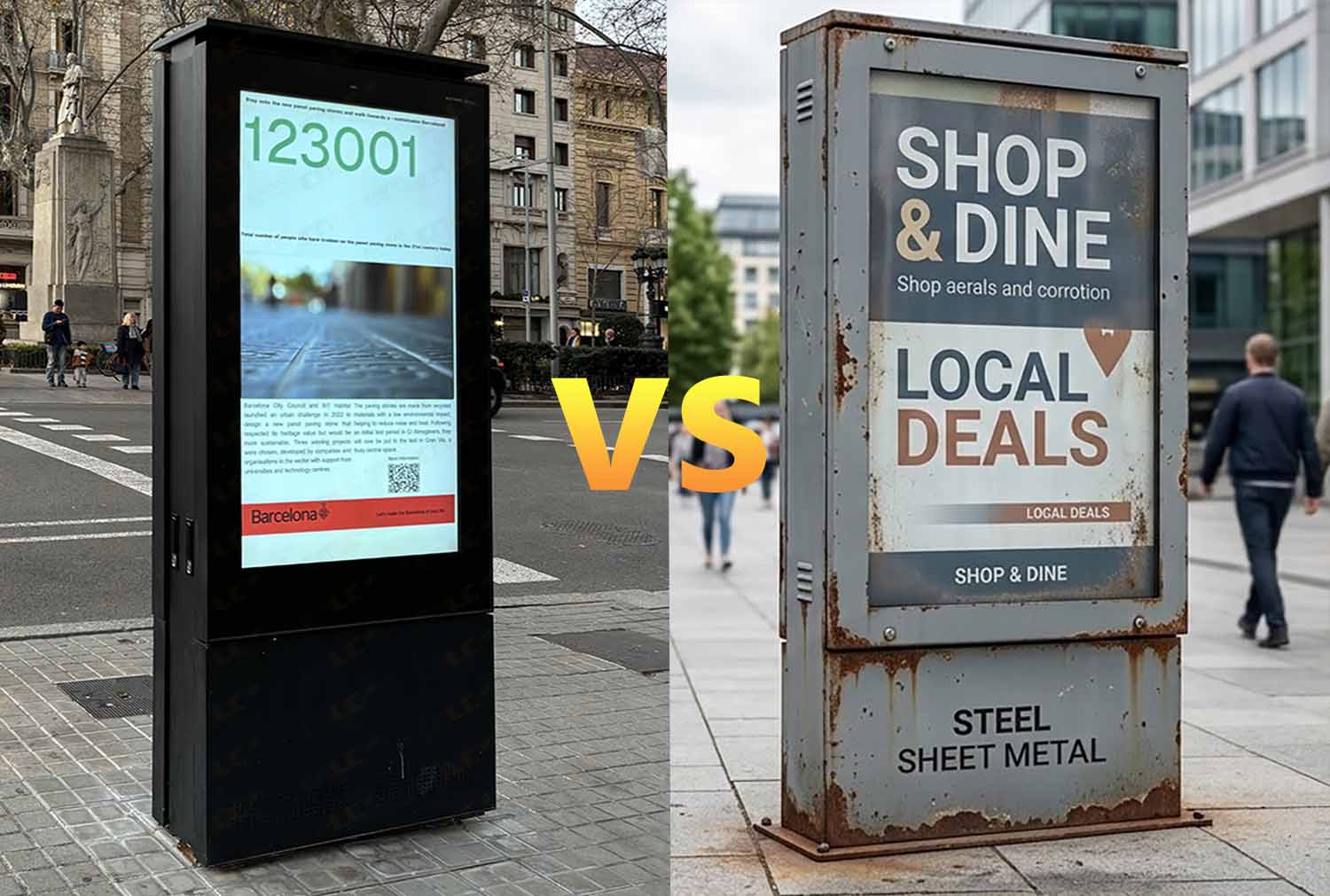
Principales différences entre les armoires en aluminium et en acier
Le matériau du boîtier influe directement sur les performances thermiques, la résistance à la corrosion, l'efficacité d'installation et la durabilité à long terme des systèmes d'affichage numérique extérieur.

| Facteur | Armoire en aluminium | Armoire en acier/tôle | Avantage pratique |
| Dissipation de la chaleur | Excellent. Conductivité thermique ≈237 W/(m·K) | Conductivité thermique inférieure ≈50 W/(m·K) | Un meilleur transfert de chaleur contribue à réduire la température interne et à prolonger la durée de vie des modules LED et des panneaux LCD. |
| résistance à la corrosion | Naturellement résistant à la corrosion grâce à sa couche d'oxyde protectrice | Sensible à la rouille sans protection par revêtement | Adapté aux environnements humides, pluvieux ou côtiers |
| Poids | Léger, environ50 à 60 % plus léger que l'acier | Structure plus lourde | Transport et installation facilités |
| Précision de traitement | Haute précision à traversProfilés en aluminium et usinage CNC | Le pliage et le soudage peuvent entraîner une déformation. | Assure une installation plus plane des modules LED ou des panneaux LCD |
| Valeur de recyclage | Valeur de recyclage élevée | Valeur de recyclage inférieure | Plus respectueux de l'environnement |
| Finition de surface | Compatible avec l'anodisation ou les revêtements haut de gamme | Revêtement de peinture standard susceptible de vieillir avec le temps | Plus adapté aux applications commerciales haut de gamme |
Grâce à ces avantages, Les structures d'armoires en aluminium sont de plus en plus privilégiées pour les équipements d'affichage numérique extérieur haut de gamme..
Pourquoi les présentoirs extérieurs nécessitent des structures en aluminium
Comparé aux écrans d'intérieur, l'affichage numérique extérieur doit fonctionner dans des conditions environnementales beaucoup plus difficiles.
Les difficultés typiques comprennent :
températures ambiantes élevées
De longues périodes d'ensoleillement direct
Pluie et humidité
Poussière et pollution de l'air
Corrosion saline dans les zones côtières
Continu Fonctionnement 24h/24 et 7j/7
Si le matériau du boîtier ne dissipe pas efficacement la chaleur ou ne résiste pas à la corrosion, les composants électroniques internes peuvent subir des dommages. surchauffe, durée de vie réduite ou performances instables du système.
Grâce à son conductivité thermique élevée, structure légère et excellente résistance à la corrosionL'aluminium offre des performances nettement supérieures en extérieur. C'est pourquoi les armoires en aluminium sont de plus en plus utilisées dans les systèmes d'affichage numérique extérieurs modernes.
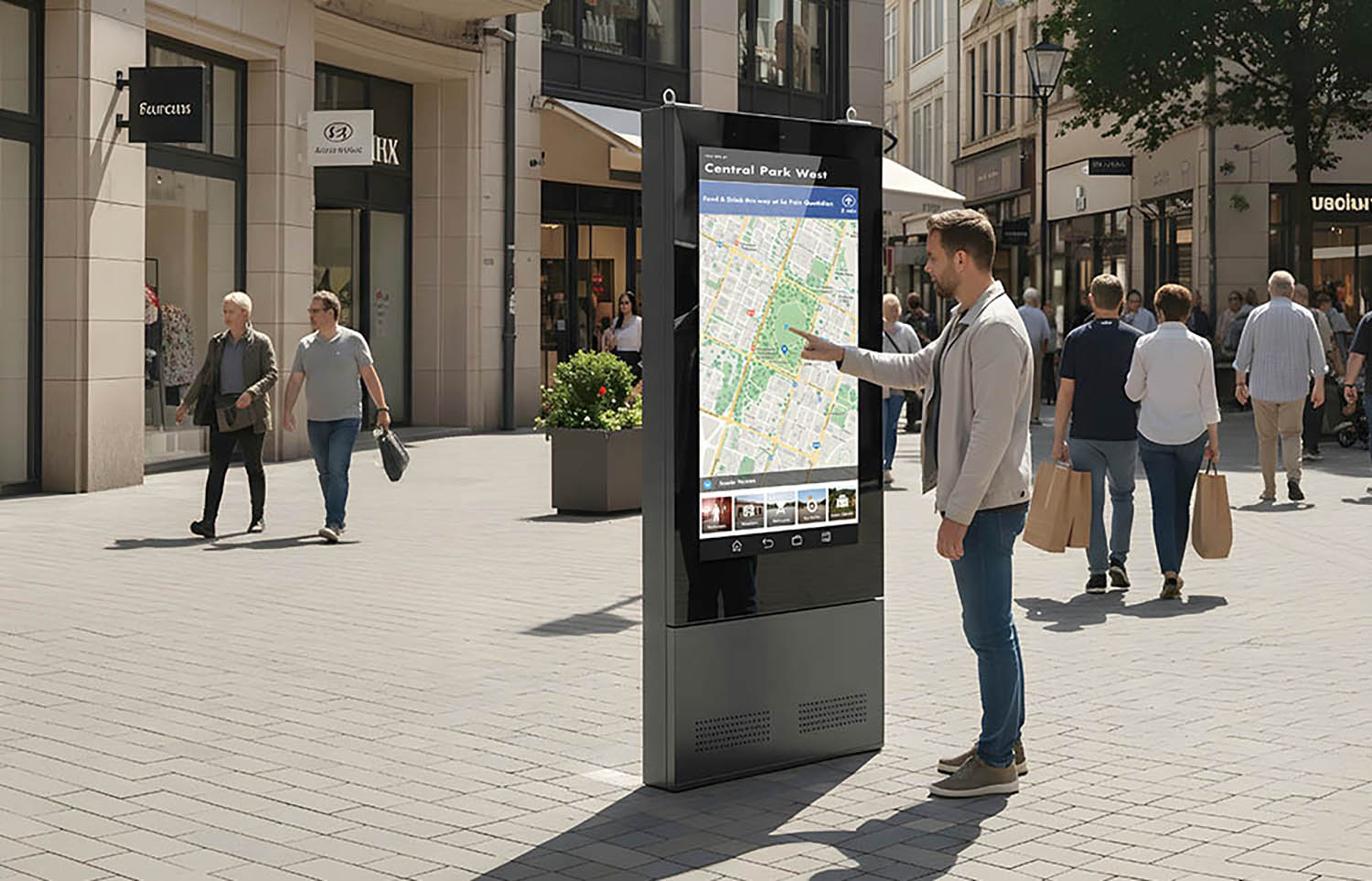
Boîtiers en aluminium pour écrans LED et LCD extérieurs
Les écrans LED extérieurs et les panneaux d'affichage numériques LCD extérieurs à haute luminosité génèrent tous deux une chaleur importante pendant leur fonctionnement, tout en étant exposés au rayonnement solaire et aux variations de température ambiante.
En utilisant un structure d'armoire en aluminium L'aluminium peut améliorer les performances globales du système d'affichage. Grâce à son excellente conductivité thermique, il permet une dissipation plus rapide de la chaleur interne, contribuant ainsi à maintenir des températures de fonctionnement stables pour les modules LED ou les panneaux LCD.
Cette approche structurelle améliore la fiabilité du système et contribue à réduire les problèmes causés par la surchauffe, tels que : dégradation de la luminosité, changements de couleur ou dommages aux composants, prolongeant ainsi la durée de vie globale du matériel d'affichage.
Conception d'armoires en aluminium CNLC pour l'affichage numérique extérieur
CNLC a plus de 19 ans d'expérience dans le développement et la fabrication de systèmes d'affichage numérique extérieur, en se concentrant sur des solutions structurelles fiables pour les environnements extérieurs exigeants.
Pour relever des défis tels que températures élevées, humidité, corrosion et fonctionnement à long terme, CNLC adopte structures d'armoires en aluminium dans bon nombre de ses produits d'affichage extérieur.
Les principales caractéristiques structurelles comprennent :
Construction d'armoires en aluminium avec une forte résistance à la corrosion
Usinage CNC de précision pour une meilleure précision structurelle
Conception optimisée du flux d'air interne pour améliorer gestion thermique
Structure d'armoire légère qui réduit frais de transport et d'installation
Résistance structurelle de qualité industrielle pour déploiement extérieur à long terme
Grâce à ces approches d'ingénierie, les systèmes d'affichage extérieur de CNLC sont conçus pour assurer une maintenance optimale. performances stables et fiables dans des environnements extérieurs complexes.
Si vous recherchez une solution fiable écrans LED extérieurs ou solutions d'affichage numérique LCD extérieurL'équipe CNLC peut fournir des produits personnalisés adaptés aux différents environnements d'installation et aux exigences des projets.
FAQ : Matériaux pour armoires d'affichage numérique extérieur
Quel est le meilleur matériau pour les caissons d'affichage numérique extérieur ?
Les armoires en aluminium sont largement considérées comme l'un des meilleurs matériaux de structure pour la signalétique numérique extérieure, car elles offrent d'excellentes avantages en termes de dissipation de la chaleur, de résistance à la corrosion et de légèreté structurelle par rapport aux armoires en acier traditionnelles.
Les écrans LED extérieurs et les panneaux LCD haute luminosité génèrent une chaleur importante en fonctionnement. Une dissipation thermique efficace permet de maintenir des températures de fonctionnement stables et d'éviter la dégradation de la luminosité, les variations de couleur et les pannes de composants.
Oui. L'aluminium forme naturellement une couche d'oxyde protectrice qui résiste à la corrosion, ce qui le rend plus adapté aux environnements humides, pluvieux ou côtiers où les structures en acier peuvent rouiller avec le temps.
Les structures en aluminium étant nettement plus légères que celles en acier, elles simplifient le transport et l'installation. Cela peut contribuer à réduire les coûts globaux du projet, notamment pour les grandes installations d'affichage extérieur.

 Tél : 8613728004632Tél : 8602082332833
 E-mail : info@cnlcdisplay.com
 RESTER CONNECTÉ Recevez nos actualités, nos offres et plus encore...