qu'est-ce que tu cherches?
- E-mail: info@cnlcdisplay.com
- Téléphone: 8613728004632






For outdoor digital signage with an air conditioning system, a small issue in the refrigeration circuit can eventually affect the thermal performance of the entire display.Outdoor displays may operate for long periods under high ambient temperatures, strong solar radiation, and continuous workloads. At the same time, display components, power supplies, and control electronics generate heat inside the enclosure. Air conditioning helps remove this heat, but its cooling performance also depends on the condition and sealing integrity of the refrigeration circuit.This is why air conditioning pressure testing is an important part of reliability verification for outdoor digital signage. Pressure-related checks can help verify the pressure condition and sealing integrity of the refrigeration circuit and identify potential issues that could affect cooling performance.
Outdoor digital signage is more than a display installed in an outdoor environment.Unlike indoor signage, outdoor displays may be exposed to:
High ambient temperatures
Direct solar radiation
Long operating hours
Heat generated by internal electronic components
Changing outdoor environmental conditions
These factors can increase the thermal load inside the enclosure.Air conditioning provides an active way to remove heat from the equipment and help maintain a suitable internal operating environment. However, the performance of the cooling equipment is not determined by the air conditioner alone.The condition of the refrigeration circuit is also important.If the circuit has a sealing problem or potential refrigerant leakage, cooling performance may be affected over time. For outdoor displays operating continuously in hot environments, this can create additional thermal stress on internal components.This is one reason why pressure-related checks are considered during the engineering verification of outdoor digital signage.

Simply put, air conditioning pressure testing for outdoor digital signage is used to check the pressure condition and sealing integrity of the refrigeration circuit and help identify potential leakage issues.The specific checking method can vary depending on the refrigeration system and test purpose. Common pressure-related checks may include:
| Check | Main Purpose |
|---|---|
| Pressure holding test | Observe pressure changes under specified conditions and check sealing integrity |
| Vacuum test | Help remove air and moisture from the refrigeration circuit and support sealing verification |
| Operating pressure check | Observe the high- and low-pressure conditions of the refrigeration system during operation |
These checks should not be treated as exactly the same procedure.For example, pressure testing is not simply the same as reading the normal operating pressure of an air conditioning system. A pressure holding test focuses more on pressure stability and circuit sealing, while an operating pressure check evaluates pressure conditions during actual system operation.The actual test method, pressure range, duration, and acceptance criteria depend on the equipment design and engineering requirements.
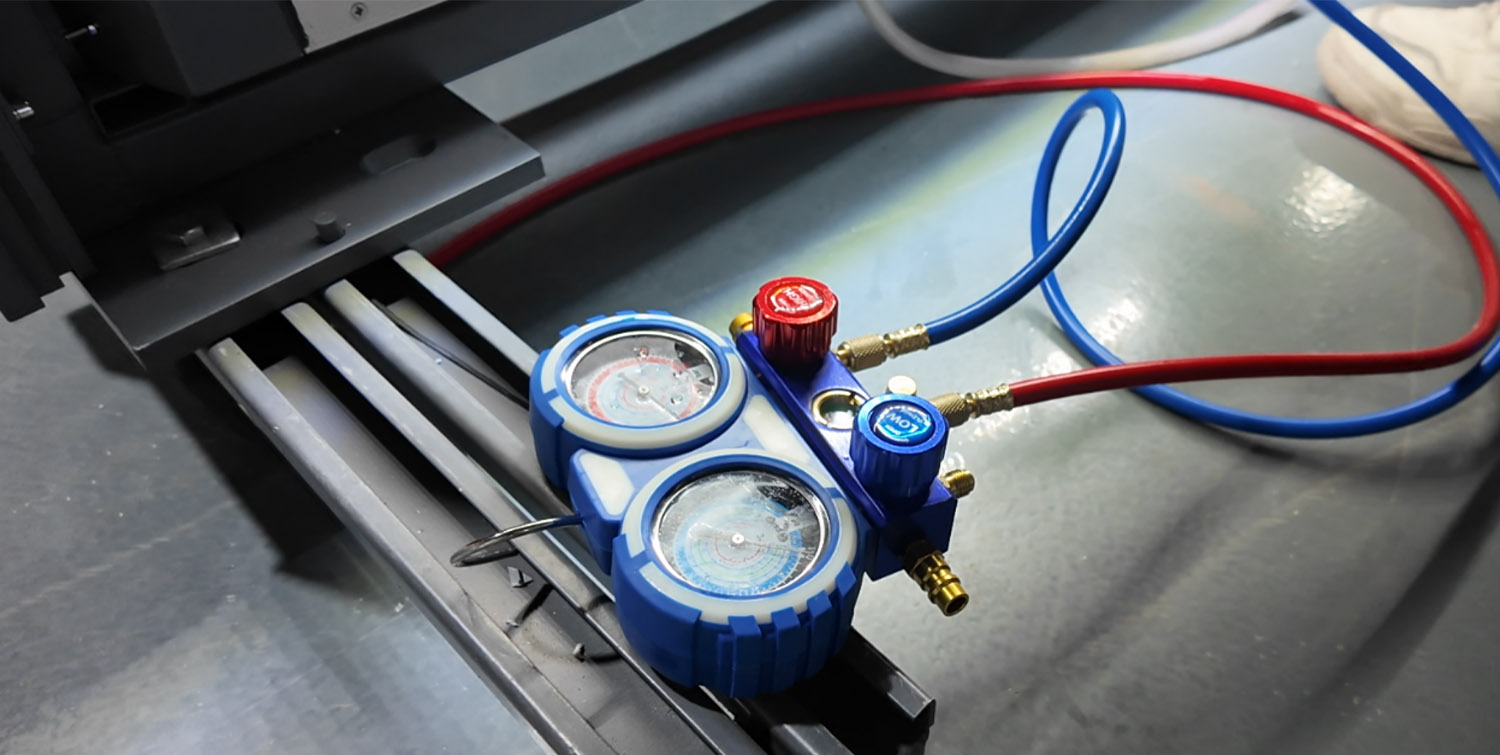
The refrigeration circuit is an important part of the thermal management system.If a potential sealing issue or leakage occurs, it may affect the cooling performance of the air conditioning equipment. A simplified risk chain can be understood as:
Potential leakage → reduced cooling performance → reduced heat removal → increased thermal load → additional stress on internal components
This does not mean that every pressure change indicates a failure. However, pressure-related checks provide an opportunity to identify potential problems before the equipment enters long-term outdoor operation.This is particularly relevant for outdoor digital signage because high temperature, solar radiation, and continuous operation can place additional demands on thermal management.The value of pressure testing is therefore not simply obtaining a pressure reading. It is part of the process of checking whether the refrigeration circuit is in an appropriate condition for reliable cooling performance.
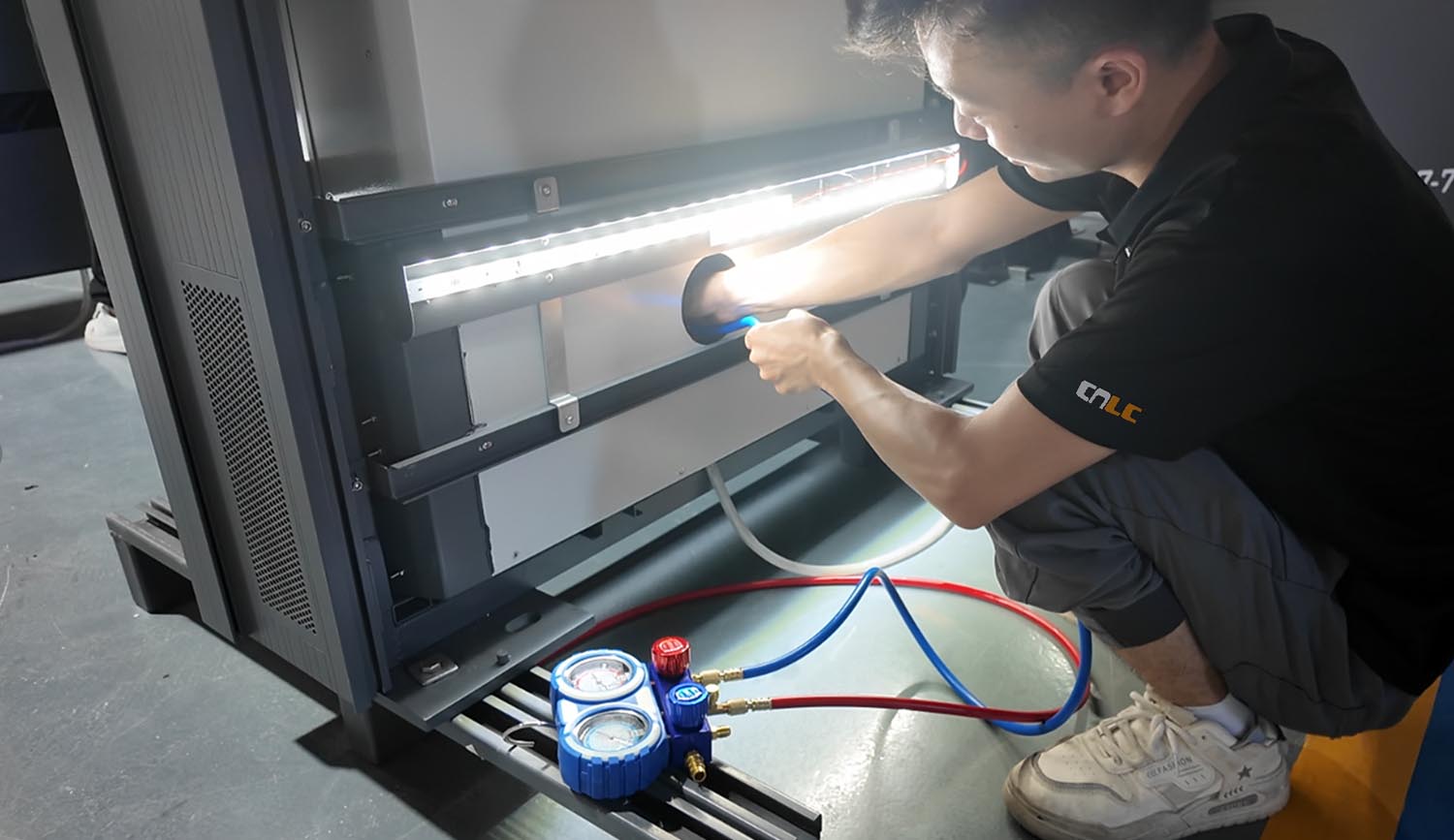
At CNLC, technicians use pressure gauges and related equipment to perform pressure-related checks on the refrigeration circuit of outdoor display equipment.During the process, the pressure condition of the circuit can be observed through the gauge set. Technicians can also inspect refrigeration lines, connection points, and related components as part of the overall check for potential sealing issues.These checks form part of CNLC's approach to verifying the thermal management of outdoor display equipment.Pressure-related check on the refrigeration circuit of an outdoor digital signage display.For a manufacturer of outdoor digital signage, real-world engineering checks are important because cooling performance is not only a theoretical design consideration. The refrigeration circuit, air conditioning equipment, enclosure, airflow, and heat dissipation design all need to work together during actual operation.
No. Pressure testing alone cannot prove the overall reliability of an outdoor display.Pressure-related checks primarily focus on the condition and sealing integrity of the refrigeration circuit. Outdoor display reliability involves many other factors, including:
High-temperature performance
Solar radiation exposure
Thermal management
Airflow and heat dissipation
Electrical stability
Water and dust protection
Structural strength
Long-term operating stability
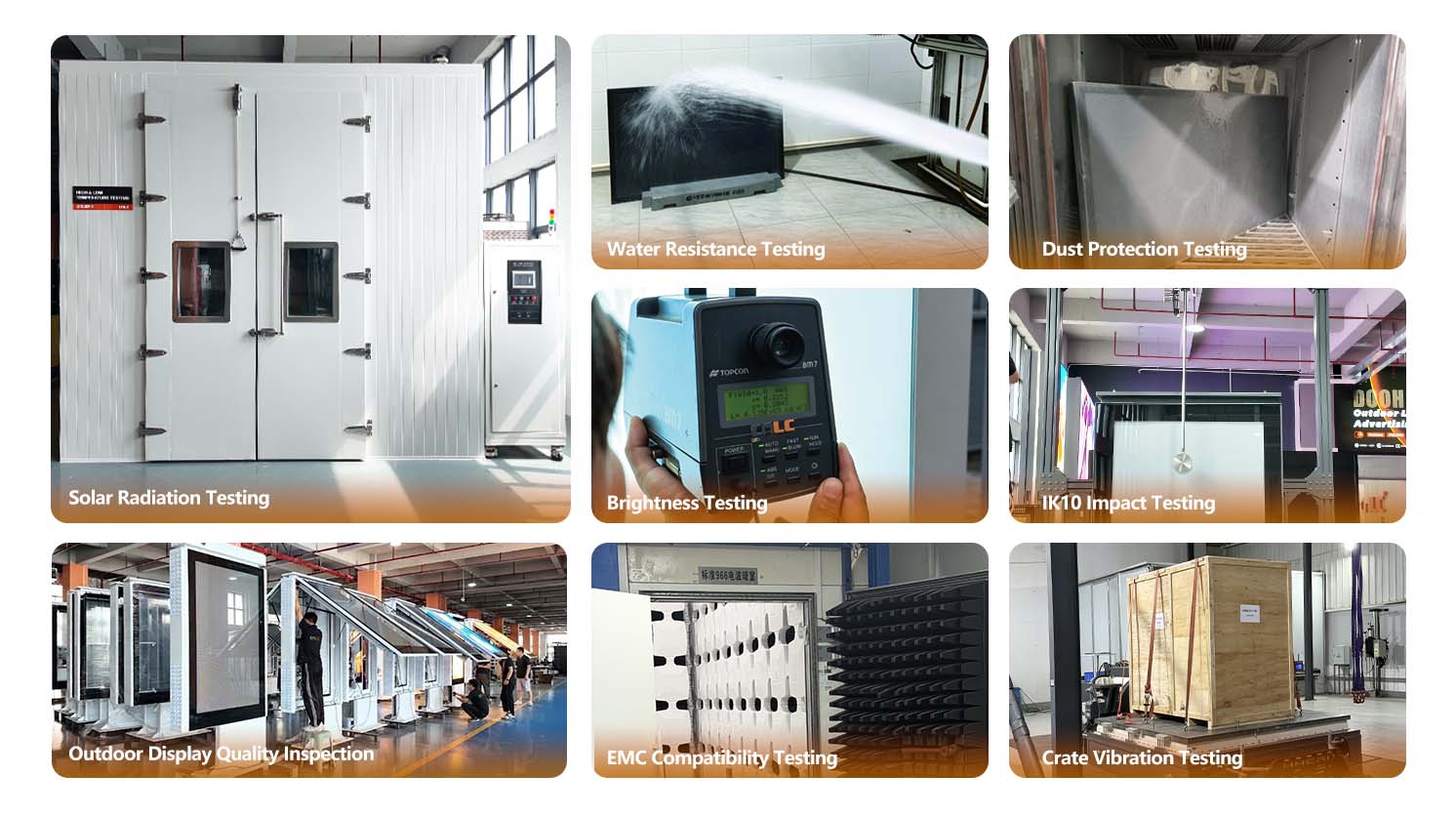
For this reason, no single test should be treated as proof of complete outdoor reliability.Instead, pressure-related checks should be considered one part of a broader reliability verification process.
Thermal management in an outdoor digital display is not determined by one component or one test.
A simplified relationship can be understood as:
Outdoor environment → Thermal load → Air conditioning → Refrigeration circuit → Heat dissipation → Long-term operation
Each part of this chain can affect the overall thermal performance of the equipment.Air conditioning provides active cooling, while the refrigeration circuit supports the cooling process. The enclosure, airflow design, heat dissipation structure, and other components also contribute to thermal management.Pressure-related checks help verify one important part of this system: the condition and sealing integrity of the refrigeration circuit.For outdoor displays designed for long-term operation, combining different verification methods provides a more complete view of product reliability.
For outdoor digital signage operating in hot and demanding environments, cooling performance is only one part of the equation. The condition of the refrigeration circuit also deserves attention.Air conditioning pressure testing helps check the pressure condition and sealing integrity of the refrigeration circuit and identify potential issues that could affect cooling performance.However, pressure testing should not be viewed as an isolated reliability test. It works together with high-temperature verification, solar radiation testing, heat dissipation checks, electrical testing, and water and dust protection verification.At CNLC, these different engineering checks support a broader approach to outdoor display reliability.Outdoor reliability is not the result of a single test. It is the result of multiple engineering factors working together.

FAQ
Air conditioning pressure testing is used to check the pressure condition and sealing integrity of the refrigeration circuit in an outdoor digital signage display. It can help identify potential leakage or other issues that may affect cooling performance.
Outdoor digital signage can operate under high temperatures, direct solar radiation, and long operating hours. Pressure-related checks help verify the condition of the refrigeration circuit and support stable cooling performance under demanding outdoor conditions.
Pressure testing can help identify potential sealing problems or leakage in the refrigeration circuit. However, the exact detection method depends on the refrigeration system and testing procedure. It should be considered part of the overall inspection process rather than the only method of leakage detection.
No. Pressure testing focuses on specific aspects of the refrigeration circuit. Overall outdoor reliability also involves thermal management, high-temperature performance, solar radiation resistance, electrical stability, water and dust protection, structural strength, and other factors.

 Tél : 8613728004632Tél : 8602082332833
 E-mail : info@cnlcdisplay.com
 RESTER CONNECTÉ Recevez nos actualités, nos offres et plus encore...